How to Make a Grocery List
How to make a grocery list that saves money: plan dinners first, check what you have, combine items into whole packages and sort them by aisle.
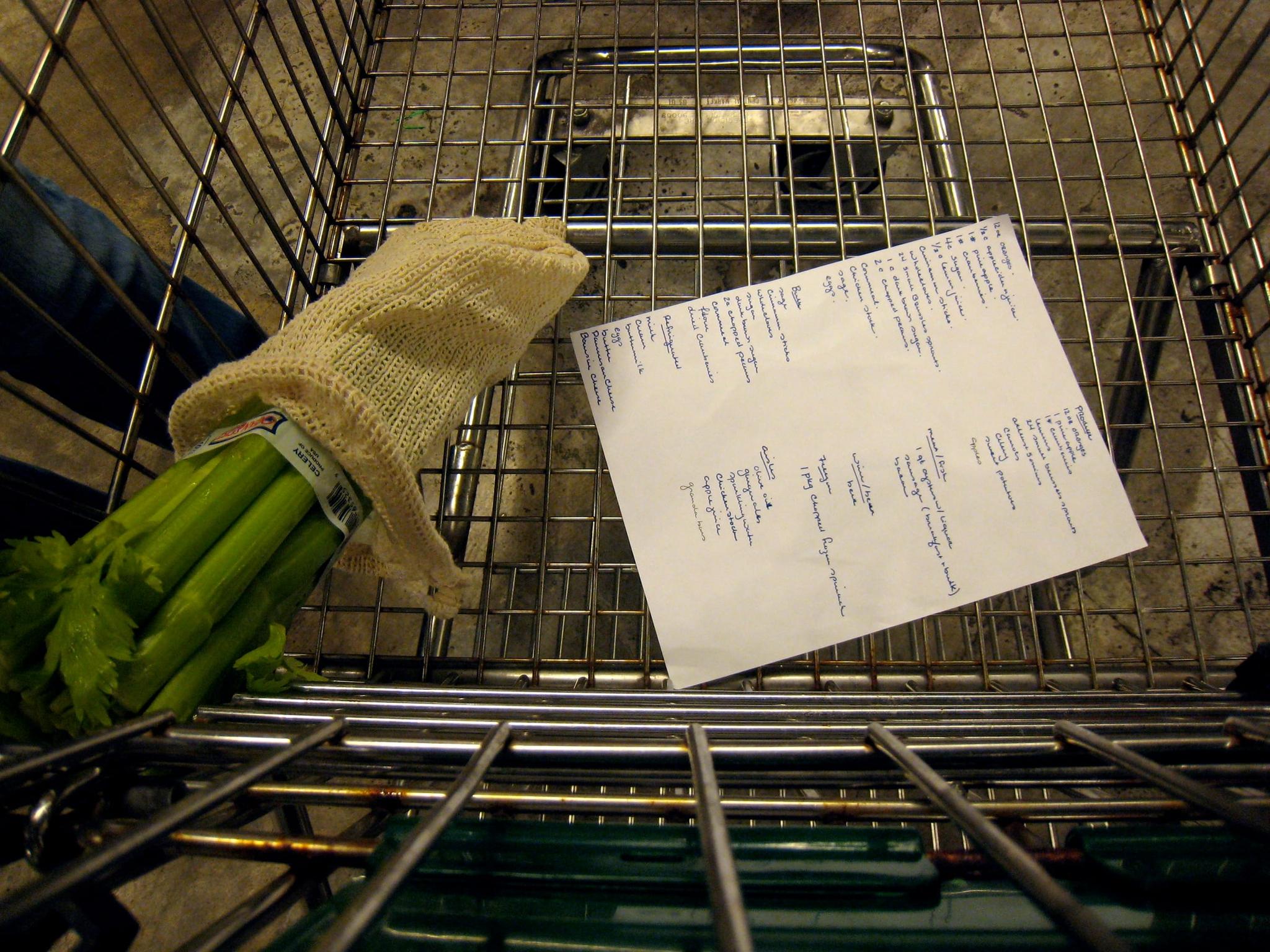
To make a grocery list, plan your dinners first, check what you already have, write down only what is missing, combine repeat items into whole packages, and sort the list by store aisle. A list built that way keeps you to one trip, helps you skip impulse buys, and tells you what the shop will cost before you reach the register. Here is the step-by-step method we use for every Pennies Per Plate meal plan, plus a basic grocery list you can copy.
How to make a grocery list in 7 steps
1. Plan your dinners first
A grocery list is only as good as the plan behind it. Pick the dinners for the week before you write a single item; most of the list follows from them. If you need help, our guide on how to plan weekly meals walks through it, and our meal plans come with the dinners already picked.
2. Shop your kitchen before you shop the store
Open the fridge, freezer and pantry and write down what needs using up. Half a bag of rice, a can of beans or a block of cheese can save you a purchase or become the start of a dinner. Check the fridge first: raw ground beef keeps only 1 to 2 days in the refrigerator,[1] while cooked leftovers keep 3 to 4 days.[2]
3. List every ingredient with its amount
Go through each recipe and write down every ingredient and how much you need, such as "2 cans black beans" or "1 lb ground beef", not just "beans". Amounts are what let you buy the right size.
4. Combine repeat items
Add up items that appear in more than one recipe. If three dinners each use half an onion, you need one and a half onions, which means buying a bag, not three onions. This is also where reusing ingredients pays off: a week that uses the same onions, canned tomatoes and shredded cheese in several dinners needs fewer packages.
5. Round up to whole packages
Stores sell whole packages, so your list should too. If your recipes need 3 cups of shredded cheese and the bag holds about 4 cups, write "1 bag shredded cheese", not "3 cups". A cup of shredded cheddar weighs about 113 g, or about 4 oz,[3] so a 16 oz bag holds about 4 cups. Rounding up shows you the real cost of the trip and what will be left over for next week. Our meal plan grocery lists do this for you.
6. Sort the list by aisle
Group items in the order you walk the store, so you do not double back and pass the snack aisle three times. A typical order:
- Produce: onions, potatoes, carrots, celery, peppers, fruit.
- Meat: ground beef, chicken, sausage.
- Dairy and eggs: milk, eggs, butter, cheese, sour cream.
- Bakery: bread, tortillas, buns.
- Pantry: rice, pasta, broth, sauces.
- Canned goods: beans, tomatoes, corn, soups.
- Baking and spices: flour, sugar, seasoning packets, spices.
- Condiments: ketchup, mustard, salsa.
- Frozen: vegetables, tater tots, hash browns. Get these last.
Picking up cold and frozen food last keeps it cold for longer. Perishable food should not sit out of refrigeration for more than 2 hours,[4] or 1 hour when it is above 90°F,[4] so go straight home and put it away first.
7. Price it before you go
Write the price next to each item, using the store's website or your last receipt, and add them up. If the total is over your budget, swap a dinner now rather than at the register. Compare unit prices (price per ounce or per pound) when sizes differ, because the bigger package is not always cheaper per ounce.
A basic grocery list for budget dinners
This master list covers the staples behind most cheap family dinners. Keep a copy, tick what you need each week, and add the items your planned recipes call for. The prices are U.S. city averages from the Bureau of Labor Statistics for October 2026, to show which staples are cheap per pound; your store will differ.
Produce
Meat
- Chicken legs, bone-in, about $1.75 per lb[7]
- Whole chicken, about $2.03 per lb[8]
- Boneless chicken breast, about $4.10 per lb[9]
- Ground beef (100% beef), about $6.75 per lb[10]
Dairy and eggs
- Eggs, about $2.32 per dozen[11]
- Whole milk, about $4.10 per gallon[12]
- Cheddar cheese, about $6.13 per lb[13]
- Butter, about $3.98 per lb[14]
Bakery
- Sliced white bread, about $1.86 per lb[15]
- Tortillas
Pantry and canned goods
- Long-grain white rice, about $1.10 per lb[16]
- Spaghetti and macaroni, about $1.38 per lb[17]
- Dried beans, about $1.68 per lb[18]
- Canned beans, canned diced tomatoes, tomato sauce
- Chicken broth
- All-purpose flour, about $0.54 per lb[19]
Frozen
- Mixed vegetables, broccoli or corn
- Tater tots or hash browns
Pantry staples to keep stocked
- Salt, pepper, cooking oil
- Chili powder, cumin, garlic powder, Italian seasoning
Grocery list ideas that save money
- Build dinners around the cheap staples. Rice, potatoes, dried beans, pasta and flour all averaged under $2 per pound in October 2026, while ground beef averaged about $6.75.[10] Stretching a pound of beef with rice or beans lowers the cost of every plate.
- Plan one leftovers night. Cook a double batch once and skip a whole recipe's worth of shopping.
- Keep a running list on the fridge. Write an item down the moment you open the last one, so it lands on next week's list.
- Stick to one store. One store means one list in one aisle order and one total. Our Walmart and Aldi pages price every recipe at a single store.
Get a free printable grocery list
A free printable grocery list is coming with our meal plans. Each one is sorted by aisle and rounded up to whole packages, so you can print it and shop. Find them on our meal plans page.
Grocery lists for our dinners
Many of our recipes share ingredients, so they shop well together. For example, Crockpot Chili, Crockpot Sloppy Joes and Taco Casserole all use ground beef, while Crockpot Red Beans and Rice and One Pot Chicken and Rice share a bag of rice. See every dinner ranked by cost in our budget dinners.
Questions
What is the best way to organize a grocery list?
By store aisle, in the order you walk the store. Start with produce, then meat, dairy and eggs, bread, the center aisles for pantry and canned goods, and frozen food last so cold items spend the least time out of the fridge.
What should be on a basic grocery list?
The staples you cook with every week, such as rice, pasta, dried or canned beans, potatoes, onions, eggs, milk, cheese, a cheap protein like chicken legs or ground beef, canned tomatoes and frozen vegetables, plus the specific items your planned dinners need.
How do I make a grocery list on a budget?
Plan your dinners first, shop your fridge and pantry before you write anything down, reuse ingredients across several meals, and round each item up to whole packages so you know the real total before you go. Write the price next to each item and add them up.
What is a master grocery list?
A master grocery list is a reusable list of everything your household buys regularly, grouped by aisle. Each week you copy the items you need from it instead of starting from a blank page.
Do you have a free printable grocery list?
Not yet, but a free printable grocery list is coming with our meal plans. Each plan's list is grouped by aisle and rounded up to whole packages. Find them on our meal plans page.
Sources
- FoodSafety.gov / USDA FSIS. FoodKeeper data file (English) used by the FoodKeeper App. Accessed November 22, 2026.
- USDA Food Safety and Inspection Service (FSIS). Leftovers and Food Safety. Accessed November 22, 2026.
- USDA Agricultural Research Service, FoodData Central. FoodData Central: Cheese, cheddar (Includes foods for USDA's Food Distribution Program) (FDC ID 173414, SR Legacy). Accessed November 22, 2026.
- USDA Food Safety and Inspection Service (FSIS). "Danger Zone" (40°F - 140°F). Accessed November 22, 2026.
- U.S. Bureau of Labor Statistics (BLS). CPI Average Price Data, series APU0000712112: Potatoes, white, per lb. (453.6 gm) in U.S. city average, average price, not seasonally adjusted. Accessed November 22, 2026.
- U.S. Bureau of Labor Statistics (BLS). CPI Average Price Data, series APU0000711211: Bananas, per lb. (453.6 gm) in U.S. city average, average price, not seasonally adjusted. Accessed November 22, 2026.
- U.S. Bureau of Labor Statistics (BLS). CPI Average Price Data, series APU0000706212: Chicken legs, bone-in, per lb. (453.6 gm) in U.S. city average, average price, not seasonally adjusted. Accessed November 22, 2026.
- U.S. Bureau of Labor Statistics (BLS). CPI Average Price Data, series APU0000706111: Chicken, fresh, whole, per lb. (453.6 gm) in U.S. city average, average price, not seasonally adjusted. Accessed November 22, 2026.
- U.S. Bureau of Labor Statistics (BLS). CPI Average Price Data, series APU0000FF1101: Chicken breast, boneless, per lb. (453.6 gm) in U.S. city average, average price, not seasonally adjusted. Accessed November 22, 2026.
- U.S. Bureau of Labor Statistics (BLS). CPI Average Price Data, series APU0000703112: Ground beef, 100% beef, per lb. (453.6 gm) in U.S. city average, average price, not seasonally adjusted. Accessed November 22, 2026.
- U.S. Bureau of Labor Statistics (BLS). CPI Average Price Data, series APU0000708111: Eggs, grade A, large, per doz. in U.S. city average, average price, not seasonally adjusted. Accessed November 22, 2026.
- U.S. Bureau of Labor Statistics (BLS). CPI Average Price Data, series APU0000709112: Milk, fresh, whole, fortified, per gal. (3.8 lit) in U.S. city average, average price, not seasonally adjusted. Accessed November 22, 2026.
- U.S. Bureau of Labor Statistics (BLS). CPI Average Price Data, series APU0000710212: Cheddar cheese, natural, per lb. (453.6 gm) in U.S. city average, average price, not seasonally adjusted. Accessed November 22, 2026.
- U.S. Bureau of Labor Statistics (BLS). CPI Average Price Data, series APU0000FS1101: Butter, stick, per lb. (453.6 gm) in U.S. city average, average price, not seasonally adjusted. Accessed November 22, 2026.
- U.S. Bureau of Labor Statistics (BLS). CPI Average Price Data, series APU0000702111: Bread, white, pan, per lb. (453.6 gm) in U.S. city average, average price, not seasonally adjusted. Accessed November 22, 2026.
- U.S. Bureau of Labor Statistics (BLS). CPI Average Price Data, series APU0000701312: Rice, white, long grain, uncooked, per lb. (453.6 gm) in U.S. city average, average price, not seasonally adjusted. Accessed November 22, 2026.
- U.S. Bureau of Labor Statistics (BLS). CPI Average Price Data, series APU0000701322: Spaghetti and macaroni, per lb. (453.6 gm) in U.S. city average, average price, not seasonally adjusted. Accessed November 22, 2026.
- U.S. Bureau of Labor Statistics (BLS). CPI Average Price Data, series APU0000714233: Beans, dried, any type, all sizes, per lb. (453.6 gm) in U.S. city average, average price, not seasonally adjusted. Accessed November 22, 2026.
- U.S. Bureau of Labor Statistics (BLS). CPI Average Price Data, series APU0000701111: Flour, white, all purpose, per lb. (453.6 gm) in U.S. city average, average price, not seasonally adjusted. Accessed November 22, 2026.