How to Plan Weekly Meals on a Budget
How to plan weekly meals on a budget in 8 steps: pick one store, reuse ingredients, plan leftovers nights and shop a list rounded up to whole packages.
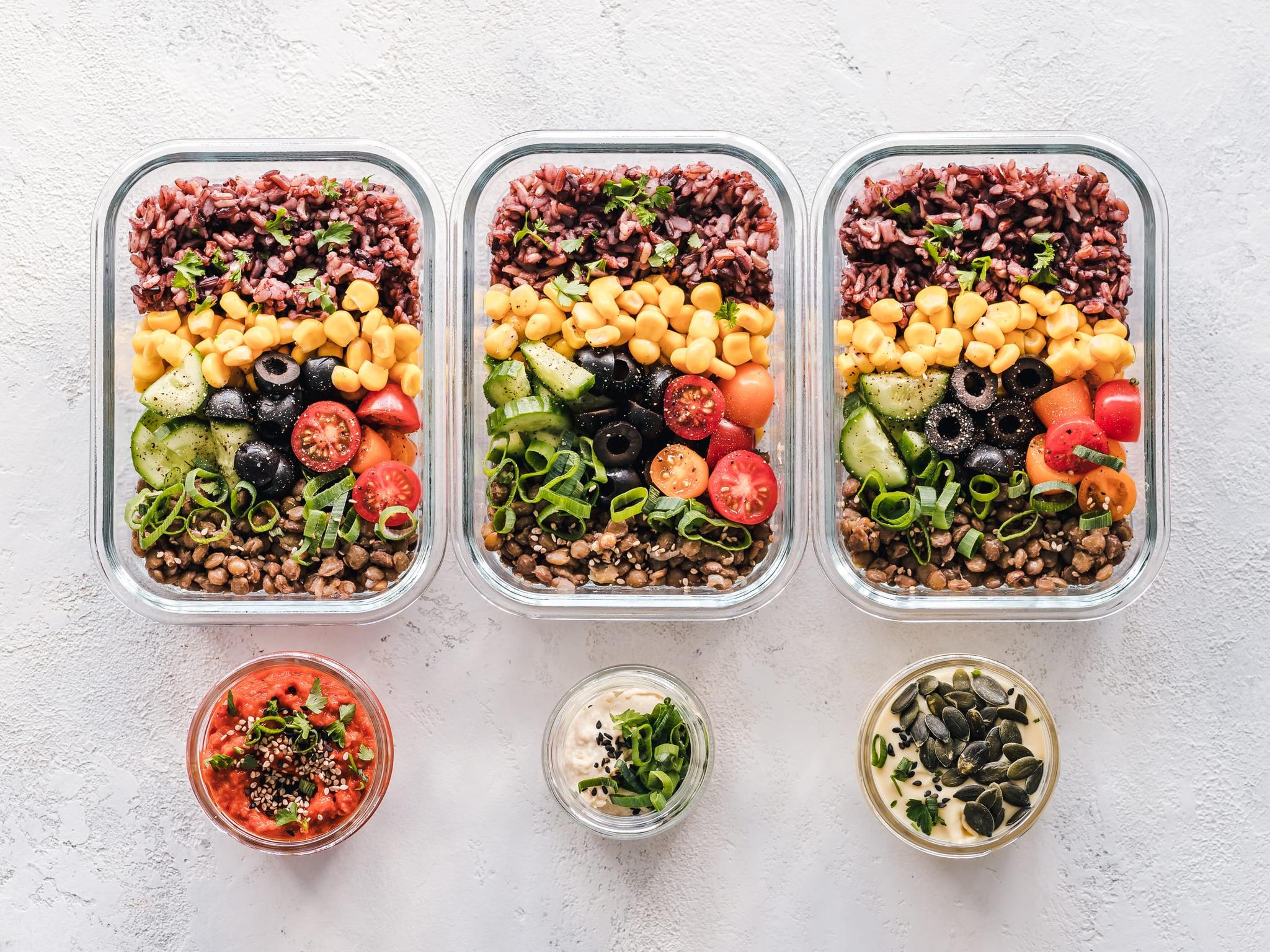
To plan weekly meals on a budget, pick one store, choose five dinners that share ingredients, plan a leftovers night or two, and turn the recipes into a single grocery list rounded up to whole packages. Price that list before you shop, and swap a dinner if it runs over. That is exactly how we build every Pennies Per Plate meal plan, and the 8 steps below show you how to do it yourself, with a weekly meal plan template you can copy.
Why plan weekly meals
A weekly plan turns "what's for dinner?" into one decision a week instead of seven. It also saves money in three ways: you buy only what the plan needs, you use up what you buy, and you skip the takeout that fills the gap on nights with no plan. Restaurant prices are forecast to rise 3.5% in 2026,[1] faster than the 2.3% forecast for groceries,[1] so every planned dinner at home goes a little further.
How to plan weekly meals in 8 steps
1. Pick one store for the week
Plan around the store you will actually shop at, and price everything there. Prices differ between stores, so a plan priced at one store and shopped at another will not add up. Our meal plans are each priced at one store: Walmart by default, Aldi for our Aldi plans.
2. Set your budget
Decide what the week's dinners may cost before you choose them. For a reference point, USDA's Thrifty Food Plan, its lowest-cost food plan, cost $236.50 per week for a family of four in October 2026, covering every meal and snack made at home.[2] That works out to about $2.82 per person per meal,[2] or about $11.26 for one meal for a family of four ($236.50 / 21 meals). Both figures are our arithmetic on USDA's weekly cost; USDA does not publish a per-meal number.
3. Count your nights and check the calendar
Look at the week ahead before you pick recipes. Mark the busy nights (practice, late shifts), the nights you have time to cook, and the nights you will eat out or skip. Busy nights get a slow cooker dinner you start in the morning; slower nights get the dinner that takes more hands-on time.
4. Choose five dinners that share ingredients
This is where the savings happen. Pick dinners that use the same base ingredients, so you buy a full package once and use all of it.
- One family pack of ground beef can cover crockpot chili and crockpot sloppy joes.
- A bag of potatoes can cover crockpot potato soup and baked potatoes under leftover chili.
- A bag of rice can cover one pot chicken and rice and crockpot red beans and rice.
Change the seasoning, not the base, and the week will not feel repetitive. For more ideas, browse our crockpot recipes or every dinner ranked by cost.
5. Plan one or two leftovers nights
Cook a big batch early in the week and serve it again a day or two later, as it is or turned into something new. Leftovers keep 3 to 4 days in the fridge,[3] so a Sunday batch is still good on Tuesday or Wednesday. Refrigerate leftovers within 2 hours of cooking,[3] and reheat them to 165°F.[3] A leftovers night is a dinner you do not have to shop for.
6. Build one grocery list, rounded up to whole packages
Write every ingredient from every recipe with its amount, then combine the repeats. Round each item up to the packages the store sells: if the week needs a cup and a half of shredded cheese, the list says one bag. Then sort it by aisle so you walk the store once. Our guide on how to make a grocery list covers this step in detail, and every one of our meal plans comes with the list already done.
7. Price the list and adjust
Total the list using the store's website or your last receipt. If it is over budget, swap the most expensive dinner for a cheaper one, such as a beans-and-rice night, before you shop. Every recipe on this site shows its cost per serving, worked out the way we explain in how we calculate cost per serving.
8. Write the prep notes
A plan fails on the night you forget to thaw the meat. Add one line per day for what has to happen ahead of time.
- Thaw: even a pound of ground meat needs a full day in the fridge to thaw,[4] so move it from the freezer the night before.
- Slow cooker: always thaw meat or poultry before it goes in the slow cooker.[5]
- Batch prep: chop the week's onions or brown two pounds of beef at once, then split them between recipes.
Weekly meal plan template
Copy this sheet, or use it as a checklist when you write your own.
| Day | Dinner | Prep note |
|---|---|---|
| Sun | Big batch, makes leftovers | Thaw meat Saturday |
| Mon | Quick dinner | |
| Tue | Leftovers | Reheat to 165°F |
| Wed | Slow cooker, makes leftovers | Start in the morning |
| Thu | Quick dinner | |
| Fri | Leftovers | Use up opened items |
| Sat | Flexible | Breakfast for dinner |
Below the plan, list the groceries by aisle and the total. A free printable weekly meal plan sheet is coming with our meal plans.
A sample budget week
Here is one way to fill the template with our recipes, built around shared ingredients.
| Day | Dinner |
|---|---|
| Sunday | Crockpot Chili, double batch |
| Monday | One Pot Chicken and Rice |
| Tuesday | Leftover chili over baked potatoes |
| Wednesday | Crockpot Sloppy Joes |
| Thursday | Crockpot Potato Soup |
| Friday | Leftovers night |
| Saturday | Breakfast Casserole for dinner |
At our Columbus Walmart, with prices checked on November 22, 2026, the grocery list for these five recipes with the chili doubled comes to $90.94. That total is rounded up to whole packages and includes our pantry allowance for salt, oil and spices, so it works out to about $12.99 for each of the seven dinners. The recipes make 40 servings in all, so a family of four also gets a few lunches out of it. The baked potatoes for Tuesday can come from the same 10 lb bag of russets as the potato soup, which uses only 3 lb.
Meal planning ideas for busy families
- Theme nights. Slow cooker Monday, rice night, breakfast for dinner on Saturday. Themes narrow the choice without fixing the recipe.
- Double and freeze. When a recipe freezes well, make twice as much and freeze half for a future week.
- Keep a list of family favorites. Ten dinners everyone eats give you two weeks of dinners without a repeat.
- Let the plan be flexible. Swap days around as the week changes; just keep the leftovers nights within 3 to 4 days of cooking.
From weekly to monthly meal planning
Once you have four weekly plans that work, rotate them, and a month of dinners is done. Buy freezer-friendly staples in bigger packs and freeze them in recipe-sized portions: raw ground beef keeps 3 to 4 months frozen for best quality,[6] and food kept at 0°F stays safe indefinitely.[7] Recheck prices every month or so, because they move.
Our ready-made weekly meal plans
Every plan is priced at one store, reuses ingredients across the week, and comes with a grocery list rounded up to whole packages.
- 7-day family meal plan on a budget, with a printable grocery list
- Weekly family meal plan: 5 cheap dinners
- Budget meal prep for the week
- 5 Walmart meals and a Walmart grocery list for 5 crockpot dinners
- Aldi meal plan: 7 family dinners and 5 Aldi dinner ideas
See them all on our meal plans page, or compare stores in our Aldi vs Walmart price check.
Questions
How do I plan weekly meals on a budget?
Pick one store, set a budget, choose five dinners that share ingredients, plan one or two leftovers nights, then turn the recipes into one grocery list rounded up to whole packages and sorted by aisle. Price the list before you shop and swap a dinner if it runs over.
How many dinners should I plan for a week?
Five cooked dinners and two leftovers or freezer nights is a good start for a family. It covers the week without buying food for seven separate recipes, and leftovers keep 3 to 4 days in the fridge, so they fit inside the week.[3]
What should a weekly meal plan template include?
The day, the dinner, a prep note (thaw, slow cooker on in the morning, double batch) and whether it makes leftovers. Add a grocery list below it, combined across recipes and sorted by aisle.
How do I go from weekly to monthly meal planning?
Build four weekly plans you like and rotate them. Buy freezer-friendly staples like ground beef in family packs and freeze portions; raw ground beef keeps 3 to 4 months in the freezer for best quality.[6]
Can I put frozen meat straight into the slow cooker?
No. USDA advises thawing meat or poultry before it goes into a slow cooker,[5] so add a thaw note to your plan the day before.
Sources
- USDA Economic Research Service (ERS). Food Price Outlook - Summary Findings. Accessed November 22, 2026.
- USDA Food and Nutrition Administration (FNA, formerly FNS), Center for Nutrition Policy and Promotion. Official USDA Thrifty Food Plan: U.S. Average, October 2026. Accessed November 22, 2026.
- USDA Food Safety and Inspection Service (FSIS). Leftovers and Food Safety. Accessed November 22, 2026.
- USDA Food Safety and Inspection Service (FSIS). The Big Thaw - Safe Defrosting Methods. Accessed November 22, 2026.
- USDA Food Safety and Inspection Service (FSIS). Slow Cookers and Food Safety. Accessed November 22, 2026.
- FoodSafety.gov / USDA FSIS. FoodKeeper data file (English) used by the FoodKeeper App. Accessed November 22, 2026.
- USDA Food Safety and Inspection Service (FSIS). Freezing and Food Safety. Accessed November 22, 2026.